Project Type : Restoration & New Intervention
Location : Iksundong, Jongno, Seoul, South Korea
Area : 161.7 m2
Role : Design, Contruction Drawing
Status : Constructed
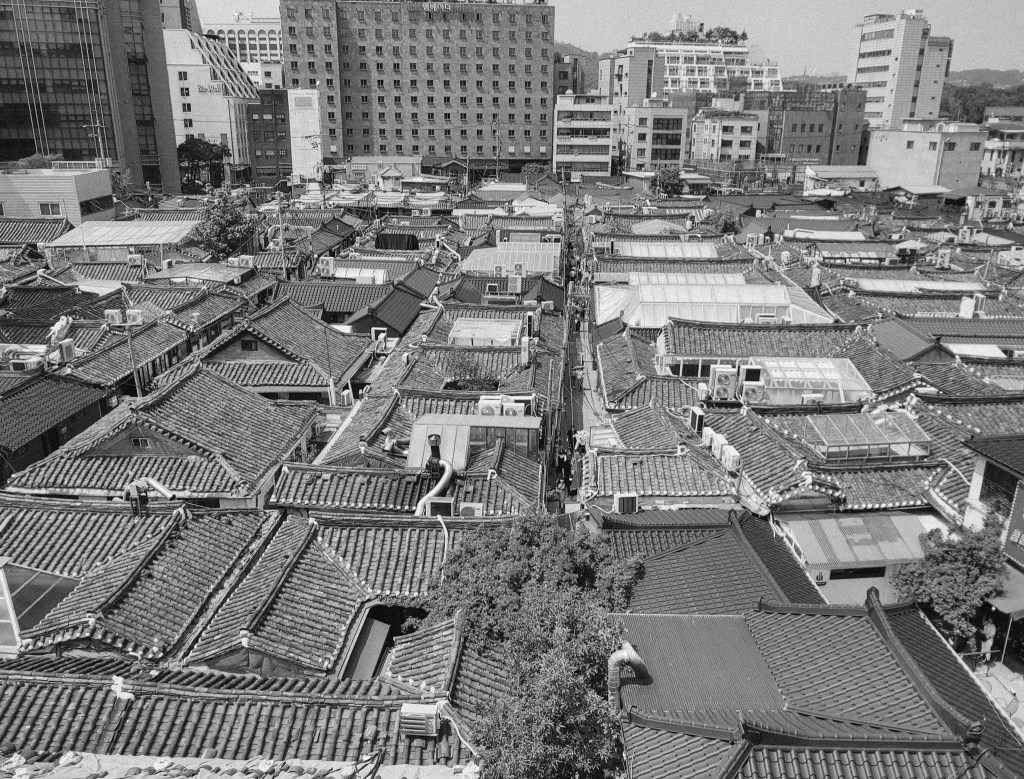
Jongno district has been the center of Seoul for over 600 years. It plays an important role as home to number of cultural, educational and political institutions. It is also a neighborhood which has not yet been completely dominated by modern high-rise buildings, as is the case in many other parts of the city. Jongno is full of tiny, picturesque alleys and traditional Korean houses – hanoks. This makes it a great place for Seoulites to find an oasis of peace and quiet in the crowded bustling capital. Unfortunately, many hanoks in the area have not been inhabited for years. Without maintenance, these historical buildings are slowly falling into disrepair.
Desi has completed Sikmul project in which four adjacent hanoks were converted into one multi-purpose space called ‘Sikmul’, which gives a contemporary twist to the character and atmosphere of traditional Korean architecture and breathes new life into the area. Now Sikmul is a vivid open art space and café bar that plays host to numerous cultural events and offers a unique gathering spot in Seoul.
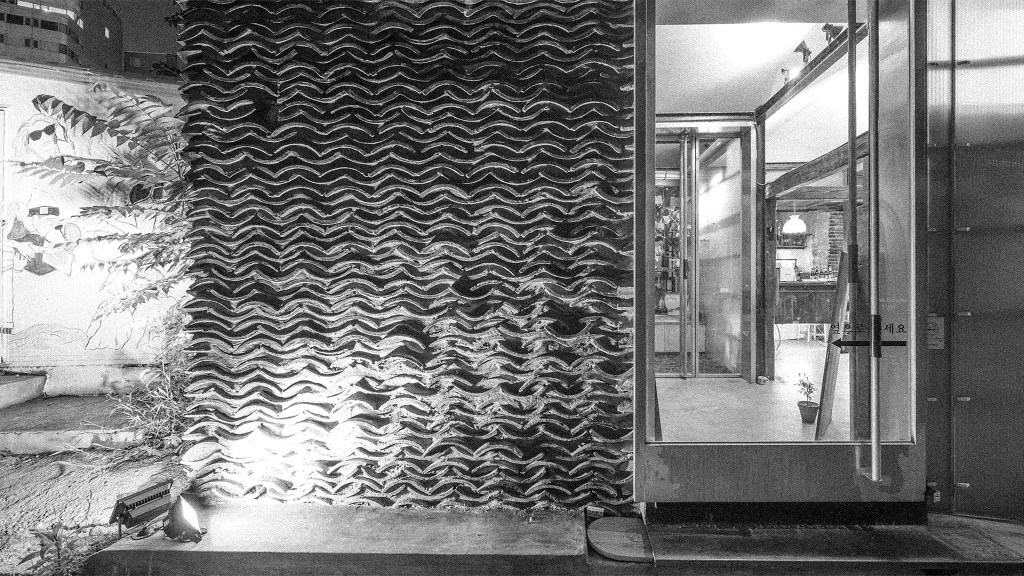
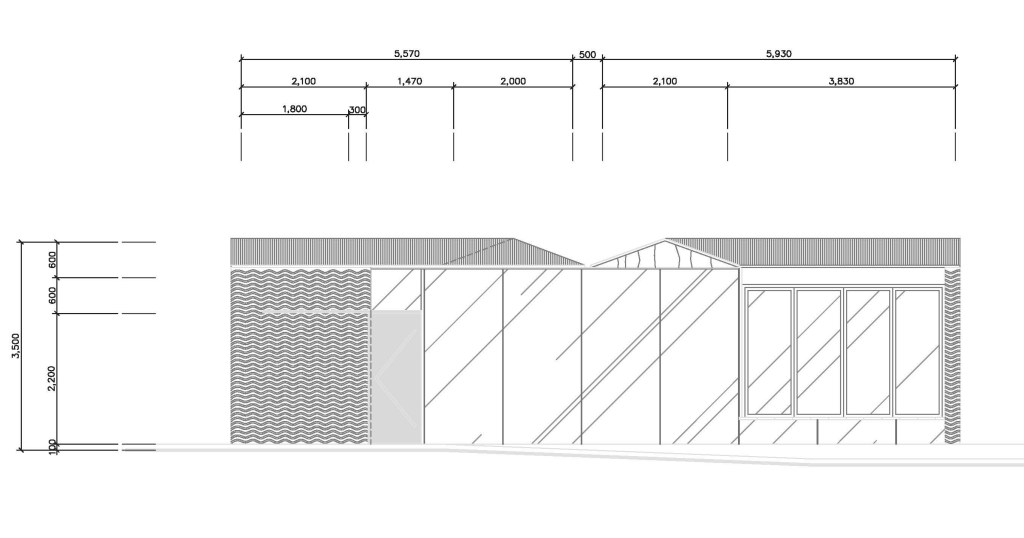
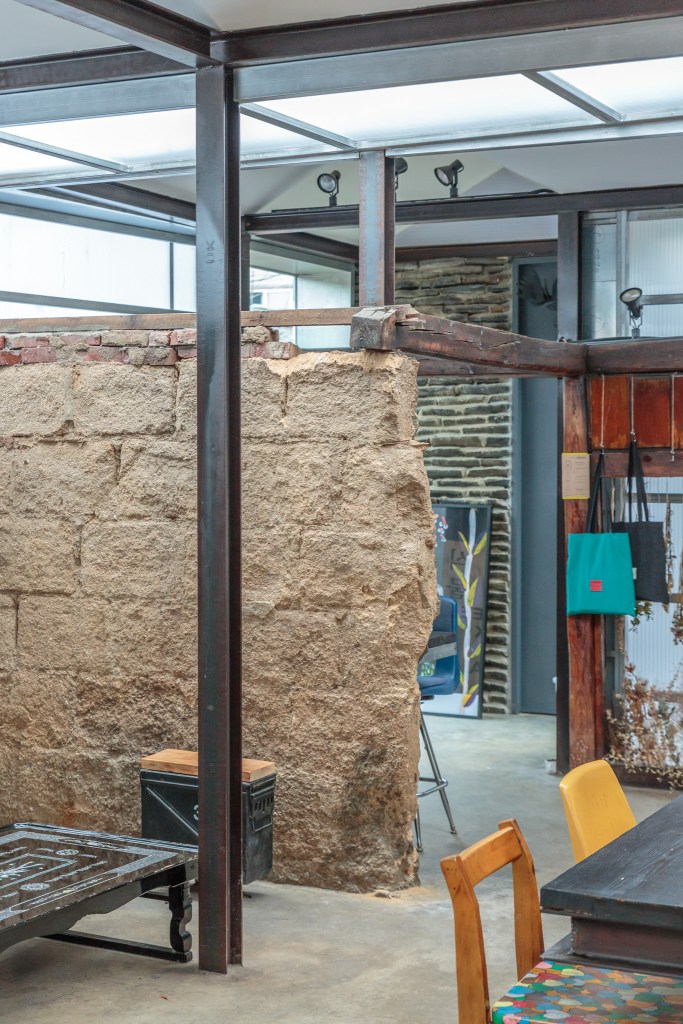
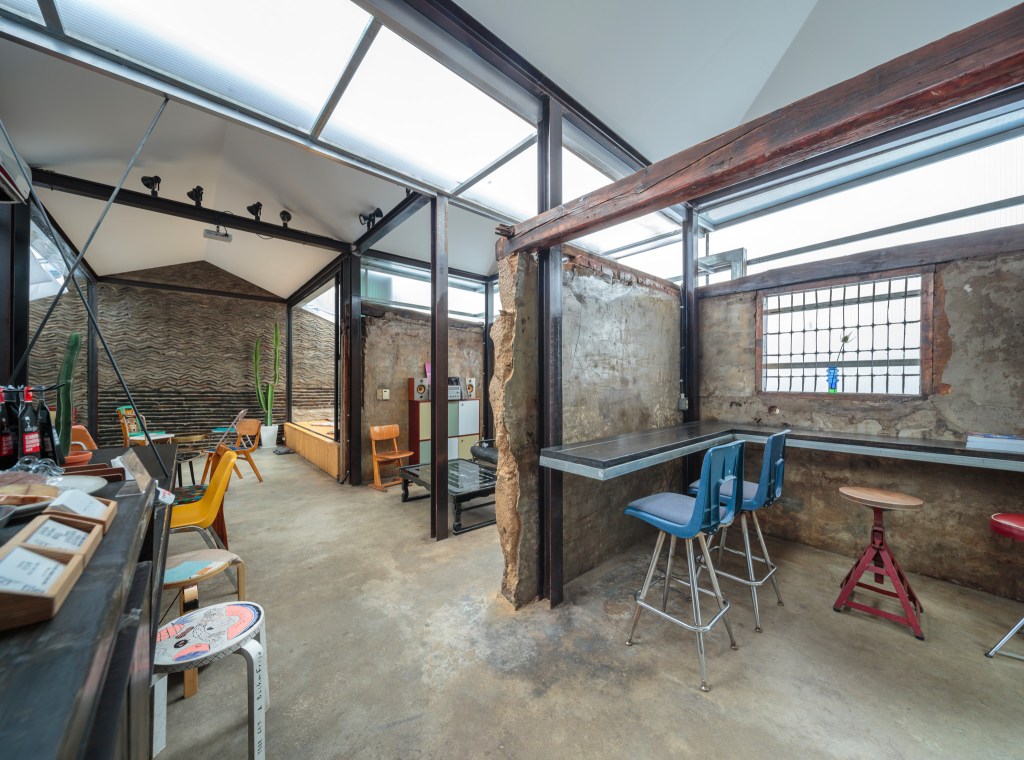
The conversion of the decrepit hanoks into a modern art space was a multi-step process. First, some of the walls which are critically dangerous were torn down and join the buildings and create a wider space. The roof was then completely removed and replaced with same shaped light weight roof and between the roofs there are transparent glass, which allowed for natural light and additional volume. Individual roof tiles were reused to construct new walls for an original look that preserved the warm aura of the old traditional buildings.
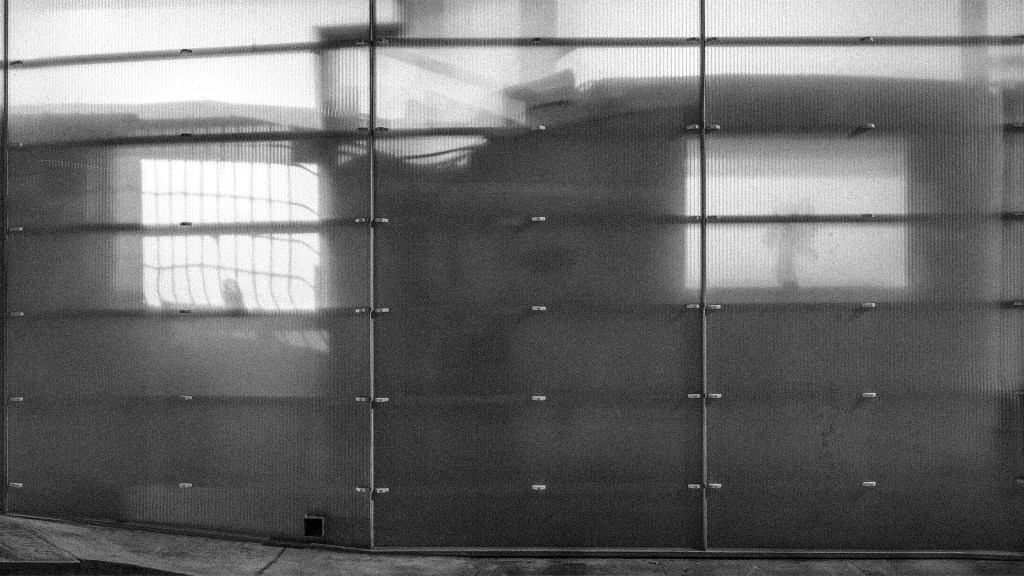
The main façade of the building was constructed with plexiglass. The remains of old walls, however, were preserved inside and after dusk, when the interior lights are turned on, their silhouette can be seen from the outside. This effect simultaneously projects a picture of the past on the present facade of the building.
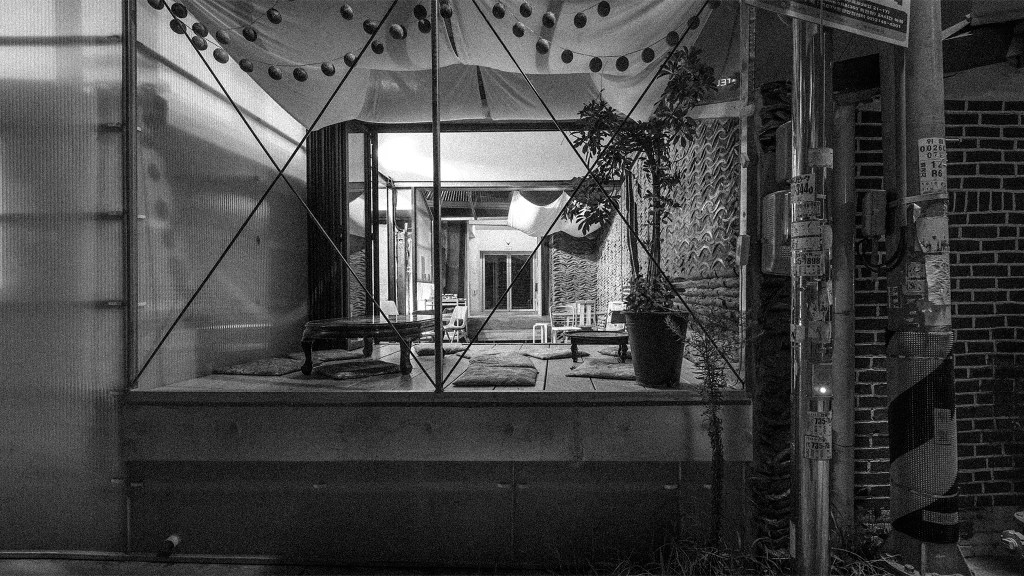
The elevated seating area on one side of the building is opened to the street, allowing guests to enjoy an outdoor atmosphere and a feeling of openness and connection with the surrounding neighborhood.
Time.
Giwa (Korean traditional roof cover) originally collected from the roof of the Hanok were reused to form the front wall of Sikmul. The Giwa that contains the time of the old building has been reborn as an excellent building contemporary material.
Memory.
By the light from the inside, existing building walls became shadows metaphorically expressed in external materials and formed a unique elevation of space.
Scale.
Daecheong, a korean traditional architectural element, is located in Sikmul facing the road. And it makes it possible for people to feel the scale of the outside road from indoors.
 DESI
DESI 